
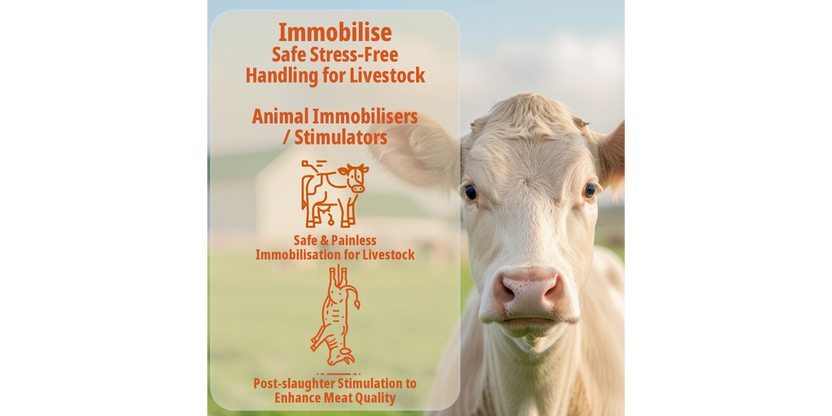
Humane Cattle Restraint for Safer, Low-Stress Handling
Posted by Maddie McKaskill on 20th Oct 2025
Handling cattle during dehorning, castration, tagging or hoof work can be stressful — for both the animal and the handler. Even with a crush or ropes, animals may kick or panic, putting people and stock at risk. Humane restraint tools offer safer, low-stress livestock handling and humane cattle restraint so procedures can be done efficiently and calmly.
Why humane restraint matters
Agriculture remains one of Australia’s most dangerous industries, with animal handling a leading cause of serious injuries. Read the latest report here.
Traditional restraint methods like crushes or ropes rely heavily on physical strength. While they have their place, they can still lead to injury, stress and inconsistent results. A humane restraint option — such as a livestock immobiliser — gives greater control, improves safety, and reduces strain on animals and operators alike.
What is a livestock immobiliser?
A livestock immobiliser is a humane cattle restraint device that applies a gentle, controlled electrical impulse to temporarily block muscle movement.
-
The animal remains conscious and breathing normally.
-
The effect is reversible and ends immediately when the impulse stops.
-
Modern units are wireless, waterproof and rechargeable, designed for real farm use.
When and where to use it
Immobilisers are commonly used by:
-
Veterinarians – for safe restraint during procedures where sedation isn’t practical
-
Farmers and graziers – during dehorning, castration, tagging, hoof trimming, or birthing assistance
-
Meat processors – for short-term control before slaughter (helping reduce stress responses). Can also be used post-slaughter to assist in maximising eating quality potential (supporting pH decline).
Always follow current animal welfare regulations and use the lowest setting for the shortest time required.
Animal welfare and safety
The immobiliser is not a pain-relief or anaesthetic tool. It should never replace proper pain management where needed.
Used correctly, it supports low-stress animal handling, reduces fear responses, and minimises risk for everyone involved.
Operators should be trained and observe local legislation such as:
-
Australian Animal Welfare Standards and Guidelines for Cattle
-
Safe Work Australia – Agriculture Health and Safety Resources
Benefits of using an immobiliser
-
Improved safety — less risk of kicks, crush injuries or panic
-
Reduced stress — calmer animals and quicker recovery
-
Better efficiency — shorter procedure times, fewer handlers needed
-
Cleaner work — stable positioning and lower risk of injury to staff or animal
Learn more
MEFE supplies the latest Waterproof, Rechargeable Animal Immobiliser, in both a Large Stock, and a Small Stock Design - for use with Stock Animals.
View the product specifications here →
For additional reading: