
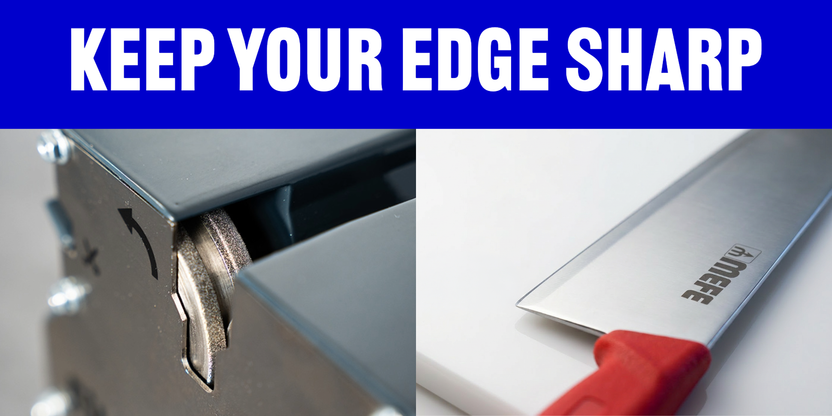
Knife Care and sharpening
Posted by Warren Leamy on 10th Jun 2026
Guide to Keeping Your Knife Sharp and Maintaining the Perfect Edge
A quality knife is one of the most important tools in any commercial kitchen, butcher shop, food production facility, or home kitchen. At MEFE, understanding knife steel, blade hardness, sharpening angles, handle design, and correct maintenance is essential to getting the best performance and longest life from your knives.
A sharp knife is safer, more efficient, and improves cutting precision, food presentation, and productivity. Whether you are selecting your first professional knife or maintaining a premium chef’s blade, understanding how steel quality, edge geometry, handle materials, and sharpening techniques work together will help you make the right decision.
Understanding Knife Steel Quality
The quality of a knife starts with the steel. Different steels provide different levels of hardness, flexibility, edge retention, corrosion resistance, and ease of sharpening.
High-Hardness Knife Steel
High-hardness steels are designed to hold an extremely sharp edge for longer periods. They are commonly used in premium chef knives, Japanese-style knives, and specialist cutting tools.
- Excellent edge retention
- Very sharp cutting performance
- Longer time between sharpening
- Superior precision cutting
The trade-off is that harder steels can be more difficult to sharpen and may be more prone to chipping if twisted, dropped, or used incorrectly.
Medium-Hardness Steel
Medium-hardness steel is one of the most practical choices for commercial kitchens, butcher shops, and food processing facilities. It balances sharpness, durability, flexibility, and ease of sharpening.
- Good edge retention
- Easier maintenance
- Suitable for daily commercial use
- Reliable performance across many applications
Softer Knife Steel
Softer steels are highly practical in high-production environments where toughness, flexibility, and rapid sharpening are important.
- Easy to sharpen
- Good flexibility
- Less likely to chip
- Cost effective
The trade-off is that softer blades lose their edge more quickly and require regular honing.
Why Blade Hardness Matters
Blade hardness is commonly measured using the Rockwell Hardness Scale, often referred to as HRC. A lower HRC generally means softer steel that is easier to sharpen, while a higher HRC means harder steel with longer edge retention.
For many professional kitchens, butcheries, and meat processing facilities, the ideal knife is often a balanced mid-range blade that offers durability, edge retention, and easy day-to-day maintenance.
Understanding Knife Edge Angles
The sharpening angle has a major impact on cutting performance and durability. A finer edge cuts more easily but may wear faster, while a wider edge is stronger and more durable.
- 15–20 degrees: Precision slicing and fine cutting
- 20–25 degrees: General kitchen and chef knives
- 30–40 degrees: Heavy-duty cutting applications
For most kitchen tasks, a 20-degree edge provides an excellent balance between sharpness and durability.
Hollow Ground and Fluted Blades
Hollow ground blades feature a slightly concave grind near the edge. This creates a thinner cutting profile, helping the knife slice cleanly with reduced drag.
Fluted blades include shallow indentations along the side of the blade. These help reduce food sticking and improve slicing consistency, especially when cutting meats, cheeses, and larger vegetables.
Knife Handle Materials: Choosing the Right Grip
While blade steel often receives most of the attention, the handle is equally important. A well-designed knife handle improves grip, control, hygiene, safety, and comfort during repetitive cutting tasks.
MEFE supplies professional knives with several handle types, including SoftGrip, textured polymer, standard polymer, and Fibrox handles. Each has different strengths depending on the environment and intended use.
SoftGrip Handles
SoftGrip handles feature a softer outer layer over a firm internal core. They are designed to improve comfort and reduce hand fatigue during extended use.
- Excellent comfort for long shifts
- Reduced hand fatigue
- Strong grip in wet conditions
- Good control for precision cutting
SoftGrip handles are ideal for chefs, catering teams, hospitality kitchens, and food preparation areas where knives are used for long periods. The main consideration is that they may show wear faster than harder polymer handles in very harsh processing environments.
Textured Polymer Handles
Textured polymer handles are made from durable food-safe plastics with a moulded anti-slip surface. The texture helps improve grip when hands are wet, oily, or exposed to food residue.
- Excellent slip resistance
- Lightweight and durable
- Easy to clean and sanitise
- Cost effective for commercial use
These handles are well suited to butcher shops, seafood processing, meat processing facilities, commercial kitchens, and food manufacturing operations.
Standard Polymer Handles
Standard polymer handles are widely used across the food industry because they are tough, hygienic, reliable, and easy to maintain.
- Highly durable
- Excellent hygiene performance
- Resistant to moisture and many cleaning chemicals
- Affordable and practical
The main drawback is that smooth polymer handles may offer less grip than textured or SoftGrip options, especially when contaminated with fats or oils.
Fibrox Handles
Fibrox is one of the most recognised professional knife handle materials and is commonly associated with premium Victorinox knives supplied by MEFE. Fibrox handles are made from fibreglass-reinforced polyamide, giving them excellent strength, durability, and grip.
- Outstanding durability
- Excellent non-slip grip
- Strong resistance to impact, moisture, oils, and food acids
- Ergonomic shape for professional use
- Suitable for demanding food production environments
Fibrox handles are ideal for professional chefs, butchers, abattoirs, meat processing plants, seafood processing, and high-volume commercial kitchens. They are firmer than SoftGrip handles but offer one of the best combinations of grip, hygiene, comfort, and long-term performance.
Which Knife Handle Is Best?
The best handle depends on the user, workplace, and cutting task. SoftGrip handles are excellent where comfort is the top priority. Textured polymer handles perform well in wet and greasy environments. Standard polymer handles are durable and economical. Fibrox handles offer premium all-round performance for professional users.
- SoftGrip: Best for comfort and long preparation sessions
- Textured polymer: Best for wet, greasy, or high-grip applications
- Standard polymer: Best for durability, hygiene, and value
- Fibrox: Best for professional all-round performance
Proper Knife Storage
Correct knife storage is essential for protecting the cutting edge. Loose storage in drawers can quickly dull a blade when it contacts other utensils or hard surfaces.
- Knife racks
- Magnetic knife strips
- Protective blade guards
- Knife rolls and scabbards
- Commercial steriliser racks
Explore MEFE’s range of knife storage solutions to help protect your knives and improve workplace safety.
Cleaning and Preventing Rust
Stainless steel is corrosion resistant, but it is not completely rust proof. Moisture, food acids, salt, and poor storage can still cause staining or corrosion.
- Wash and dry knives immediately after use
- Never leave knives soaking in water
- Avoid washing knives loose in a sink with other dishes
- Store knives dry in a rack, sheath, or roll
Many professional knives are dishwasher safe, but dishwashing is not recommended because the blade can contact hard surfaces during the wash cycle and dull the edge. The preferred method is to wash by hand, wipe carefully away from the edge, dry with a soft cloth, and store safely.
Knife Sharpening Methods
Sharpening with a Whetstone
Whetstones remain one of the most effective ways to sharpen a knife. They provide excellent edge control and can produce a very sharp professional finish when used correctly.
View MEFE’s range of sharpening stones and whetstones for professional edge maintenance.
Using a Sharpening Steel
A sharpening steel is mainly used to realign and maintain the cutting edge rather than fully sharpen a blunt knife. In high-production environments, operators may steel their knives frequently throughout the day.
MEFE supplies sharpening steels for commercial kitchens, butcher shops, and meat processing facilities.
EasySharp and Production Sharpening Systems
In commercial meat processing environments, sharpening systems such as EasySharp units are commonly mounted near workstations. These systems allow operators to quickly hone a blade by drawing the knife through opposing edge formers.
MEFE supplies a range of EasySharp systems designed for commercial butcheries and food production facilities.
The Importance of Cold Grinding
When a knife becomes significantly blunt, steeling is no longer enough. The blade must be reground to restore the original edge geometry. Excessive heat during grinding can damage the temper of the steel, reducing hardness and edge retention.
Professional sharpening systems use methods such as water-cooled wheels, slow-speed grinding, diamond-coated wheels, and belt systems to reduce heat and maintain blade performance.
One of the most important principles in knife sharpening is avoiding heat buildup during grinding. Excessive heat destroys the temper of the steel, permanently softening the blade and ruining its ability to hold an edge.
This is why professional sharpening systems use:
- Water-cooled whetstones
- Slow-speed grinding systems
- Diamond-coated sharpening wheels
- Cadmium-coated grinding systems
- Belt sharpening systems with minimal heat generation
Cold grinding maintains the hardness and integrity of the blade steel while restoring a razor-sharp edge.
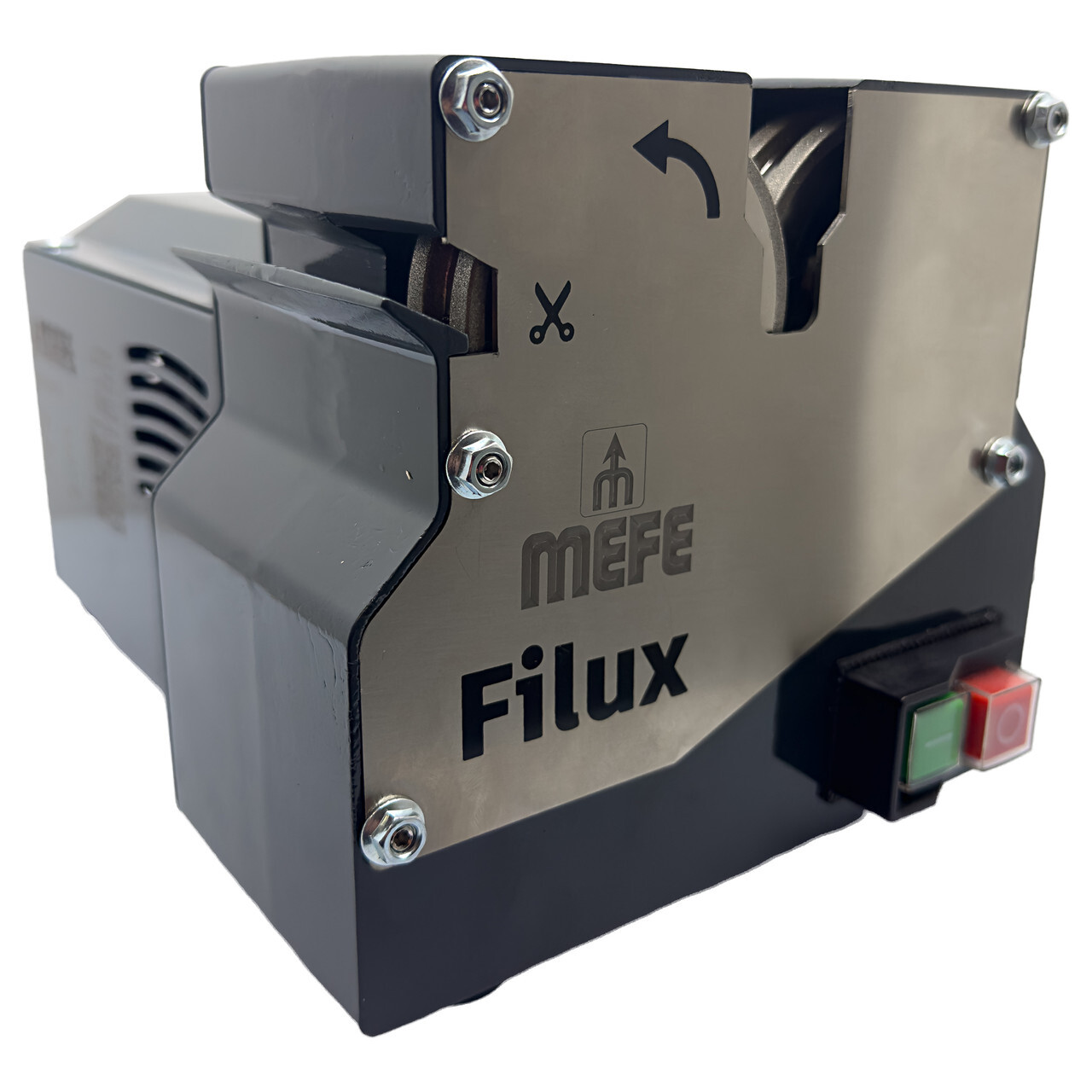
For larger operations, explore MEFE’s professional power knife sharpener options.
Professional Knife Sharpening Machines
Modern knife sharpening machines range from hobby-level sharpeners to fully adjustable commercial systems used in large processing plants.
Popular systems include:
- Water-cooled whetstone sharpeners
- Handheld belt sharpening systems
- Diamond wheel sharpeners
- Commercial hollow grinding machines
Belt sharpening systems are particularly effective because they generate very little heat and allow precise angle control. Adjustable-angle systems can create extremely fine edges suitable for professional kitchen use.
Commercial production facilities often use dedicated sharpening operators who sharpen all plant knives daily while workers maintain the edge during shifts using honing steels.
https://www.mefe.com.au/professional-power-knife-sharpener/
Frequently Asked Questions
How often should I sharpen my knife?
Professional kitchen knives may need daily honing and full sharpening every few weeks, depending on use. In meat processing environments, frequent steeling throughout the shift is common.
What is the best knife angle for kitchen use?
A 20-degree edge angle is a practical choice for many kitchen knives because it balances sharpness and durability.
Can stainless steel knives rust?
Yes. Stainless steel is corrosion resistant, not completely rust proof. Knives should be washed, dried, and stored correctly after use.
Are harder knives always better?
Not always. Harder knives hold an edge longer but can be more difficult to sharpen and may chip if used incorrectly. Softer knives are easier to maintain and often better suited to heavy commercial use.
Which knife handle is best?
SoftGrip is excellent for comfort, textured polymer is ideal for wet and greasy environments, standard polymer is durable and economical, and Fibrox provides one of the best all-round professional handle options.
Choose the Right Knife and Maintain It Properly
Choosing the right knife involves balancing blade hardness, edge retention, handle comfort, hygiene, durability, and intended use. Proper storage, careful cleaning, regular honing, and correct sharpening techniques are essential for maintaining peak performance.
At MEFE, we supply professional knives, sharpening equipment, knife storage products, and food processing tools for commercial kitchens, butcher shops, abattoirs, and food production facilities.
Explore the full range of professional knife and sharpening solutions at MEFE.
Useful resources: